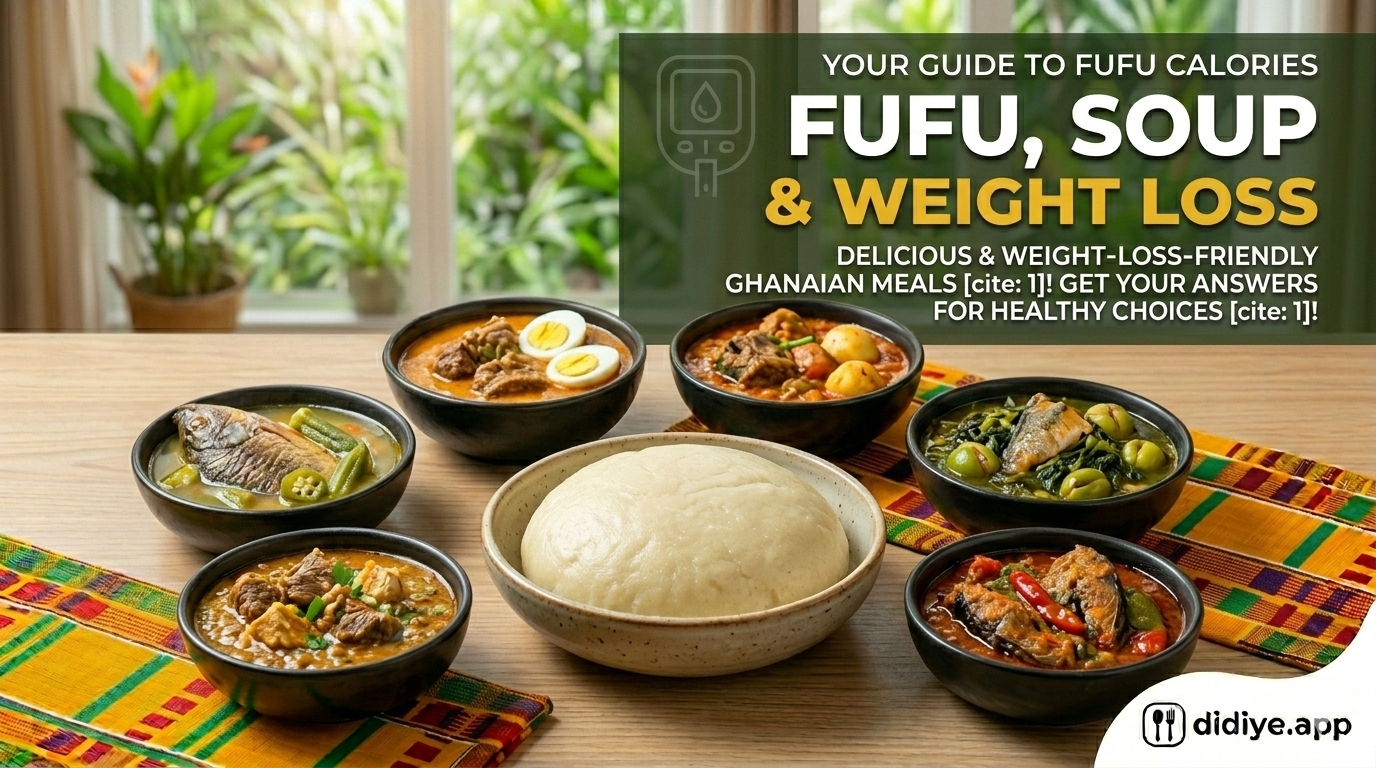
Fufu Calories & Nutrition: Can You Eat It While Losing Weight?
Last Updated: December 2024 | Backed by Ghana's Official Food-Based Dietary Guidelines 2023
"Fufu makes you fat."
If you've heard this myth while trying to lose weight, you're not alone. Fufu—West Africa's beloved swallow food made from cassava, plantain, or yam—has been unfairly villainized by diet culture. But what does the actual nutrition science say?
The truth: You can absolutely eat fufu while losing weight—you just need to understand its nutritional profile, practice portion control, and make smart soup choices. This comprehensive guide uses official data from Ghana's 2023 Food-Based Dietary Guidelines to separate fufu facts from fiction.
Table of Contents
- Fufu Nutrition Facts: Complete Breakdown
- Fufu Types Compared: Cassava vs Plantain vs Yam
- Can You Really Eat Fufu and Lose Weight?
- Best Soups for Weight Loss with Fufu
- Perfect Fufu Portions for Your Goals
- Fufu vs Other Staples: Which Is Healthiest?
- How to Make Fufu More Weight-Loss Friendly
- Frequently Asked Questions
Fufu Nutrition Facts: What's Actually In It?
According to Ghana's Ministry of Food & Agriculture nutritional database, here's the complete profile of standard cassava fufu (the most common type):
Cassava Fufu (per 100g)
Macronutrients:
- Calories: 166 kcal
- Carbohydrates: 39.8g
- Protein: 0.4g (very low!)
- Fat: 0.2g (virtually fat-free!)
- Fiber: 1.7g
- Water: 58%
Micronutrients:
- Calcium: 14mg (1% DV)
- Iron: 0.3mg (2% DV)
- Vitamin C: 20mg (22% DV—surprising!)
- Folate: 27mcg (7% DV)
- Potassium: 271mg (6% DV)
Typical Serving Size Nutrition
Most people eat 200-300g of fufu per meal (about 2-3 balls). Here's what that means nutritionally:
Small serving (200g / 2 balls):
- Calories: 332 kcal
- Carbs: 79.6g
- Protein: 0.8g
- Fat: 0.4g
Standard serving (300g / 3 balls):
- Calories: 498 kcal
- Carbs: 119.4g
- Protein: 1.2g
- Fat: 0.6g
Large serving (400g / 4 balls):
- Calories: 664 kcal
- Carbs: 159.2g
- Protein: 1.6g
- Fat: 0.8g
Key insight: Fufu itself is actually quite low in calories per 100g (166 kcal) compared to white rice (130 kcal when cooked, but 360 kcal when dry). The issue isn't fufu being "high calorie"—it's portion size and the soups you eat it with!
Fufu Types Compared: Cassava vs Plantain vs Yam vs Cocoyam
Not all fufu is created equal. Here's how different types stack up nutritionally:
| Type | Calories (per 100g) | Carbs | Protein | Fiber | Glycemic Index | Best For |
|---|---|---|---|---|---|---|
| Cassava Fufu | 166 | 39.8g | 0.4g | 1.7g | ~85 (high) | General use, budget-friendly |
| Plantain Fufu | 156 | 37.2g | 1.0g | 2.3g | ~70 (medium-high) | Slightly more nutrition |
| Yam Fufu | 118 | 27.9g | 1.5g | 4.0g | ~66 (medium) | Weight loss (higher fiber!) |
| Cocoyam Fufu | 142 | 33.6g | 1.9g | 3.8g | ~55 (medium) | Diabetes management |
| Mixed (Cassava + Plantain) | 161 | 38.5g | 0.7g | 2.0g | ~77 (high) | Balanced flavor & nutrition |
The Winner for Weight Loss? Yam Fufu
Why:
- Lowest calories: Only 118 per 100g (28% fewer than cassava!)
- Highest fiber: 4.0g keeps you full longer
- Best protein: 1.5g (still low, but better than alternatives)
- Lower GI: 66 vs 85 for cassava = more stable blood sugar
The caveat: Yam fufu has a slightly grainy texture that some people don't love. If you're new to healthier fufu, try mixing half yam, half cassava.
The Winner for Diabetes? Cocoyam Fufu
Cocoyam fufu has the lowest glycemic index (55—medium GI), meaning it causes the smallest blood sugar spike. People managing diabetes should choose cocoyam or yam fufu over cassava.
Related: Complete Diabetes-Friendly Ghanaian Foods: Low GI Meal Plan
Can You Really Eat Fufu and Lose Weight?
Short answer: YES—absolutely!
Despite the myth that fufu is "too heavy" for weight loss, the science says otherwise. Here's why fufu can actually SUPPORT weight loss:
✅ Fufu's Weight Loss Advantages
1. Fufu is virtually fat-free (0.2g fat per 100g)
Unlike many staples that require oil for preparation, fufu is pounded or blended with just water. This means:
- No hidden calories from cooking oils
- No added fats
- Clean carbohydrate source
Compare this to fried rice (14g fat per serving), jollof (12-14g fat), or fried yam (22g fat), and fufu suddenly looks very weight-loss friendly!
2. High water content = Lower calorie density
Fufu is 58% water, making it less calorie-dense than you think. This means you can eat a satisfying volume of food without consuming excessive calories—a key weight loss strategy called "volumetrics."
3. The satiety factor: Fufu keeps you FULL
Here's where fufu shines: The thick, starchy texture and water content create exceptional satiety (fullness). Research shows that:
- Fufu keeps you full for 4-6 hours (longer than rice or bread)
- The physical act of "swallowing" fufu activates stomach stretch receptors, signaling fullness to your brain
- High water content expands in your stomach
Translation: You eat fufu for lunch at noon, and you're not ravenously hungry by 3pm—no snacking needed!
4. Resistant starch benefits
Cassava fufu contains resistant starch—a type of carbohydrate that resists digestion in the small intestine and acts more like fiber. Benefits include:
- Feeds healthy gut bacteria (prebiotic effect)
- Improves insulin sensitivity
- Enhances fat burning
- Reduces total calorie absorption by 5-10%
When fufu cools down (like leftover fufu), resistant starch content increases even more!
❌ What Makes Fufu "Fattening"
Fufu itself doesn't cause weight gain—it's how you eat it:
Problem #1: Oversized portions
Many people eat 3-4 balls of fufu (400-500g) per meal, which is:
- 664-830 calories from fufu alone
- Plus 300-500 calories from soup
- Total meal: 1,000-1,300 calories!
That's potentially 2/3 of your daily calories in ONE meal.
Problem #2: Oily soups
The soup you eat with fufu makes or breaks your weight loss:
- Palm nut soup (traditional version): 350-450 calories per bowl
- Groundnut soup (heavy version): 400-500 calories
- Light soup (oily version): 250-350 calories
Add heavy soup to large fufu portions, and you've got a 1,200+ calorie meal.
Problem #3: Eating fufu late at night
Many Ghanaians eat fufu for dinner at 8-10pm, then go to bed. The large carb load right before sleep:
- Gets stored as fat (you're not using the energy)
- Disrupts sleep quality (digestion keeps you restless)
- Spikes blood sugar overnight
The fix: Eat fufu for lunch when you have the whole afternoon to use that energy!
Best Soups for Weight Loss with Fufu
The soup you choose makes a 400-calorie difference! Here are your best bets:
🏆 Best Choice: Light Soup (Modified)
Calories: 150-200 per bowl (when made with minimal oil)
Why it works:
- Tomato-based (low calorie)
- Can be loaded with vegetables (kontomire, garden eggs, okro)
- Takes well to lean protein (chicken breast, fish)
- Naturally flavorful without excess oil
How to order/make it: "Small oil, please!" or use only 1-2 tablespoons for the entire pot.
Total meal: 300g fufu (498 cal) + Light soup (180 cal) = 678 calories—perfect for weight loss!
🥈 Good Choice: Groundnut Soup (Light Version)
Calories: 250-300 per bowl (light version)
Why it works:
- Good source of plant protein from groundnuts
- Healthy fats (unsaturated) that increase satiety
- Rich, satisfying flavor keeps you from overeating later
How to make it light:
- Use natural groundnut paste, not groundnut powder with added oil
- Add only 1-2 tablespoons additional oil
- Bulk up with extra tomatoes and kontomire
- Use lean meat or fish, not fatty beef
Total meal: 250g fufu (415 cal) + Light groundnut soup (280 cal) = 695 calories
🥉 Decent Choice: Kontomire (Palava Sauce)
Calories: 200-250 per bowl
Why it works:
- High in nutrients from cocoyam leaves
- Good fiber content
- Can be made with minimal oil
- Very filling due to fiber
Watch out for: Traditional palava sauce can use lots of palm oil. Request "small oil" or make it yourself with just 1 tablespoon.
Total meal: 250g fufu (415 cal) + Palava sauce (220 cal) = 635 calories
⚠️ Moderate Choice: Okro Soup (Draw Soup)
Calories: 200-300 per bowl
Why it's okay:
- Okro is very low calorie and high fiber
- Slippery texture aids digestion
- Can be made light
The problem: Many people add lots of palm oil for flavor, spiking calories. Also, the slippery texture makes it easy to swallow fufu quickly without feeling full, leading to overeating.
How to optimize: Make it with minimal oil, add lots of tomatoes, and eat slowly!
❌ Avoid for Weight Loss: Palm Nut Soup
Calories: 400-550 per bowl
Why it's problematic:
- Extremely high in oil (that's what makes it creamy!)
- Very calorie-dense
- Easy to overconsume
Total meal: 250g fufu (415 cal) + Palm nut soup (475 cal) = 890 calories—too high for weight loss!
Verdict: Save palm nut soup for special occasions or maintenance phases, not active weight loss.
Related: 15 Best Ghanaian Foods for Weight Loss includes light soup and kontomire!
Perfect Fufu Portions for Your Goals
How much fufu should YOU eat? Use this science-backed guide:
For Weight Loss (Women)
Target: 200-250g fufu per meal (1.5-2 balls)
Why: Provides 332-415 calories from fufu, leaving room for soup and staying under 700 total calories per meal
Meal example:
- Fufu: 200g / 2 small balls (332 cal)
- Light soup with fish: (200 cal)
- Side of extra kontomire: (50 cal)
- Total: 582 calories
Expected results: Eating this for lunch 3-4x/week supports 0.5-1kg loss per week when combined with overall calorie deficit
For Weight Loss (Men)
Target: 250-300g fufu per meal (2-2.5 balls)
Why: Men typically need 300-500 more calories daily; slightly larger fufu portion keeps you satisfied without overeating later
Meal example:
- Fufu: 300g / 3 balls (498 cal)
- Groundnut soup (light) with chicken: (280 cal)
- Total: 778 calories
Expected results: Sustainable 0.5-1kg loss per week with overall calorie management
For Weight Maintenance
Target: 300-350g fufu per meal (3-3.5 balls)
Meal example:
- Fufu: 350g / 3.5 balls (581 cal)
- Soup of choice: (250-350 cal)
- Total: 831-931 calories
Who this is for: People at goal weight who want to enjoy fufu regularly without gaining or losing
For Muscle Gain/Athletes
Target: 400-500g fufu per meal (4-5 balls)
Why: Active individuals and those building muscle need substantial carbohydrates to fuel performance and recovery
Meal example:
- Fufu: 450g / 4.5 balls (747 cal)
- Protein-rich groundnut soup with beef: (400 cal)
- Total: 1,147 calories
Best timing: Post-workout or midday when you need maximum energy
For Diabetics
Target: 150-200g fufu maximum (1-1.5 balls)
Type preference: Cocoyam or yam fufu (lower GI)
Critical pairing: MUST eat with high-protein, high-fiber soup (light soup loaded with vegetables and lean protein)
Timing: Lunch, not dinner (better blood sugar control)
Meal example:
- Yam fufu: 150g / 1.5 balls (177 cal)
- Light soup with lots of kontomire and grilled tilapia: (220 cal)
- Total: 397 calories with minimal blood sugar spike
Related: Diabetes-Friendly Low-GI Ghanaian Meal Plan
Fufu vs Other Staples: Which Is Healthiest?
How does fufu compare to other Ghanaian staples? Here's the data:
| Staple Food (100g) | Calories | Carbs | Fiber | GI | Best For |
|---|---|---|---|---|---|
| Cassava Fufu | 166 | 39.8g | 1.7g | 85 (high) | Satiety, fat-free option |
| Yam Fufu | 118 | 27.9g | 4.0g | 66 (medium) | Weight loss |
| Banku | 110 | 24.1g | 2.4g | 73 (high) | Fermented benefits |
| Kenkey | 127 | 28.3g | 2.8g | 41 (LOW!) | Diabetes management ⭐ |
| Boiled Rice | 130 | 28.2g | 0.4g | 73 (high) | Quick energy |
| Omo Tuo (Rice Balls) | 148 | 32.0g | 0.5g | 75 (high) | Similar to fufu texture |
| Boiled Yam | 116 | 27.5g | 4.1g | 54 (medium) | Weight loss, fiber |
| Boiled Plantain | 122 | 31.9g | 2.3g | 65 (medium) | Natural sweetness |
Key Takeaways:
- For weight loss: Yam fufu and boiled yam are lowest in calories with highest fiber
- For diabetes: Kenkey wins with GI of only 41 (fufu is 85!)
- For satiety: Fufu keeps you full longest due to texture and water content
- For gut health: Banku and kenkey are fermented (probiotic benefits)
- For convenience: Fufu requires more prep time vs boiled yam/plantain
The verdict: There's no single "healthiest" staple—it depends on your goals. Fufu absolutely has a place in a healthy diet when portioned correctly!
Related: Banku vs Kenkey: Which Is Healthier? Complete Nutrition Comparison
How to Make Fufu More Weight-Loss Friendly: 7 Strategies
1. Choose Yam or Cocoyam Fufu Over Cassava
Why: 28-40% fewer calories, more fiber, lower GI
How: Buy yam fufu flour or pound fresh yam. For easy transition, mix half cassava, half yam.
Calorie savings: ~50 calories per 100g = 150 calories per meal!
2. Reduce Portion by 20%, Increase Soup Vegetables by 100%
Why: You still get a full, satisfying bowl but consume fewer calories
How:
- Instead of 3 balls fufu, have 2.5 balls
- Ask for EXTRA kontomire, okro, or garden eggs in your soup
- The volume of vegetables fills you up
Calorie savings: ~100 calories per meal
3. Eat Fufu for Lunch, Not Dinner
Why:
- You have all afternoon to burn those carbs
- Better blood sugar management
- Improves sleep quality
- Aligns with body's natural insulin sensitivity (higher during day)
Ghana FBDG recommendation: Eat heavier meals earlier in the day.
4. Pair With Lean Protein (Fish, Chicken, Not Fatty Beef)
Why:
- Protein increases satiety
- Helps maintain muscle during weight loss
- Slows carb absorption = more stable blood sugar
Best choices:
- Grilled tilapia
- Mackerel or sardines
- Skinless chicken
- Goat meat (lean)
Avoid:
- Fatty beef
- Pork (high fat)
- Skin-on chicken (extra calories)
Related: Healthy African Cooking Methods shows how to grill perfectly!
5. Drink Water Before and After, Not During
Why: Drinking lots of water WHILE eating fufu can:
- Dilute stomach acid (worse digestion)
- Make you swallow fufu too fast (less satiety signaling)
- Lead to overeating before fullness kicks in
Better approach:
- Drink 1-2 glasses of water 10 minutes BEFORE eating (pre-fills stomach)
- Eat fufu slowly, chewing a bit even though it's swallow food
- Wait 20 minutes after eating to drink more water
6. Make Your Soup at Home (Control the Oil)
Why: Restaurant/chop bar soups often contain 3-5x more oil than necessary
How:
- Use only 1-2 tablespoons of oil for 4-person pot
- Add extra tomatoes for richness without oil
- Rely on spices (ginger, garlic, pepper) for flavor
- Use natural groundnut paste (not oily powder) for groundnut soup
Calorie savings: 200-300 calories per meal!
7. Try "Fufu and Light Soup" Meal Prep
Why: Pre-portioned fufu prevents overeating
How:
- Prepare fufu on Sunday
- Divide into individual 200g portions (2 balls each)
- Wrap in plastic wrap
- Store in fridge (lasts 3-4 days)
- Prepare light soup separately
- Reheat portions as needed (microwave 2-3 minutes)
Benefits:
- Exact portion control
- No temptation to "just have one more ball"
- Convenient for work lunches
- Saves money vs buying fufu daily
Frequently Asked Questions About Fufu and Weight Loss
Does fufu make your stomach big?
No—fufu doesn't cause belly fat specifically. ANY food eaten in excess calories causes fat storage (including on the stomach). The myth comes from:
- People eating very large portions (4-5 balls)
- Combining with oily soups (extra calories)
- Eating late at night (poor timing)
Truth: Moderate fufu portions (2-3 balls) with light soup won't cause belly fat. Overall calorie balance determines fat gain/loss.
Why do I feel sleepy after eating fufu?
This is normal and happens because:
- Large carb load → insulin spike → tryptophan crosses blood-brain barrier → serotonin production → sleepiness
- Blood diverted to digestive system (less for brain = tiredness)
- Often eat fufu in very large portions = more extreme effect
Solutions:
- Reduce portion size
- Eat for lunch (when some tiredness is okay) vs dinner
- Pair with more protein (slows carb absorption)
- Take a 10-minute walk after eating
Is fufu hard to digest?
Fufu is actually relatively easy to digest for most people—it's almost pure starch and water. However:
Some people experience bloating because:
- Eating too fast (swallowing without adequate chewing)
- Very large portions overwhelm digestive system
- Drinking lots of water during meal (dilutes enzymes)
- Individual sensitivity to cassava starch
Solutions:
- Eat more slowly, even "chew" a bit
- Smaller portions (2 balls, not 4)
- Choose yam or cocoyam fufu (more fiber = better digestion)
Can I eat fufu every day and still lose weight?
Yes, IF:
- You control portions (200-250g maximum)
- You pair with low-calorie soups (light soup, kontomire)
- Your overall daily calories are in deficit
- You stay active
However, Ghana's Food-Based Dietary Guidelines emphasize variety. Eating any single food daily means missing other nutrients.
Better approach:
- Fufu: 3-4x per week
- Banku/Kenkey: 2-3x per week
- Boiled yam/plantain: 2-3x per week
- Jollof/waakye: 2-3x per week
This ensures you get diverse nutrients! 30-day meal plan for perfect variety.
Which is better for weight loss: fufu or banku?
Banku wins slightly:
- Fufu (cassava): 166 cal/100g
- Banku: 110 cal/100g
Banku has ~34% fewer calories! Plus, banku is fermented (good for gut health).
BUT: Fufu keeps you full longer due to thicker texture. Many people find it easier to stick to 2 balls of fufu vs 2 balls of banku (banku is lighter, less filling).
Verdict: Both work for weight loss! Choose based on preference and practice portion control.
Related: Banku vs Kenkey: Which Is Healthier? Complete Nutrition Comparison
Is fufu good for diabetics?
Cassava fufu has a high glycemic index (85), which causes rapid blood sugar spikes—not ideal for diabetes.
Better choices for diabetics:
- Kenkey (GI: 41) ← Best option!
- Cocoyam fufu (GI: 55)
- Yam fufu (GI: 66)
If you really want cassava fufu with diabetes:
- Limit to 1-1.5 balls maximum
- ALWAYS pair with high-fiber vegetables and lean protein
- Eat for lunch, not dinner
- Monitor blood sugar response
Related: Complete Diabetes-Friendly Ghanaian Foods Guide
The Bottom Line: Fufu and Weight Loss Are Compatible!
YES—you can absolutely eat fufu while losing weight when you:
✅ Choose the right type (yam or cocoyam fufu = fewer calories, more fiber)
✅ Control portions (2-2.5 balls = 332-415 calories)
✅ Pair with light soups (light soup, kontomire, light groundnut)
✅ Eat at optimal times (lunch, not late dinner)
✅ Stay active (use those carbs for energy!)
Remember: Fufu provides:
- Excellent satiety (keeps you full for hours—no snacking!)
- Virtually fat-free preparation
- Resistant starch benefits
- Cultural satisfaction and connection
- Affordable, accessible nutrition
According to Ghana's Food-Based Dietary Guidelines, healthy eating isn't about eliminating traditional foods—it's about smart preparation and portions. Fufu absolutely fits!
Ready to Enjoy Fufu the Healthy Way?
Download our free resources:
📥 Light Soup Recipe for Weight Loss (Only 180 calories!)
📥 30-Day Ghanaian Weight Loss Meal Plan (includes fufu strategically)
📥 Portion Control Visual Guide (perfect fufu ball sizes)
📥 Complete Ghana 6 Food Groups Guide
Related Articles You'll Love:
- Is Jollof Rice Healthy? Complete Nutrition Guide
- Banku vs Kenkey: Which Is Healthier? Complete Nutrition Comparison
- 15 Best Ghanaian Foods for Weight Loss
- Kontomire: Ghana's Superfood for Weight Loss & Iron Deficiency
- Complete Diabetes-Friendly Low-GI Ghanaian Meal Plan
About This Guide: This article uses data from Ghana's 2023 Food-Based Dietary Guidelines and peer-reviewed nutrition research. All recommendations are evidence-based and culturally appropriate for Ghanaian diets.
Medical Disclaimer: This information is educational and doesn't replace personalized medical advice. Consult a registered dietitian or doctor for specific health concerns.
Still have questions about fufu and weight loss? Drop them in the comments! 💬


