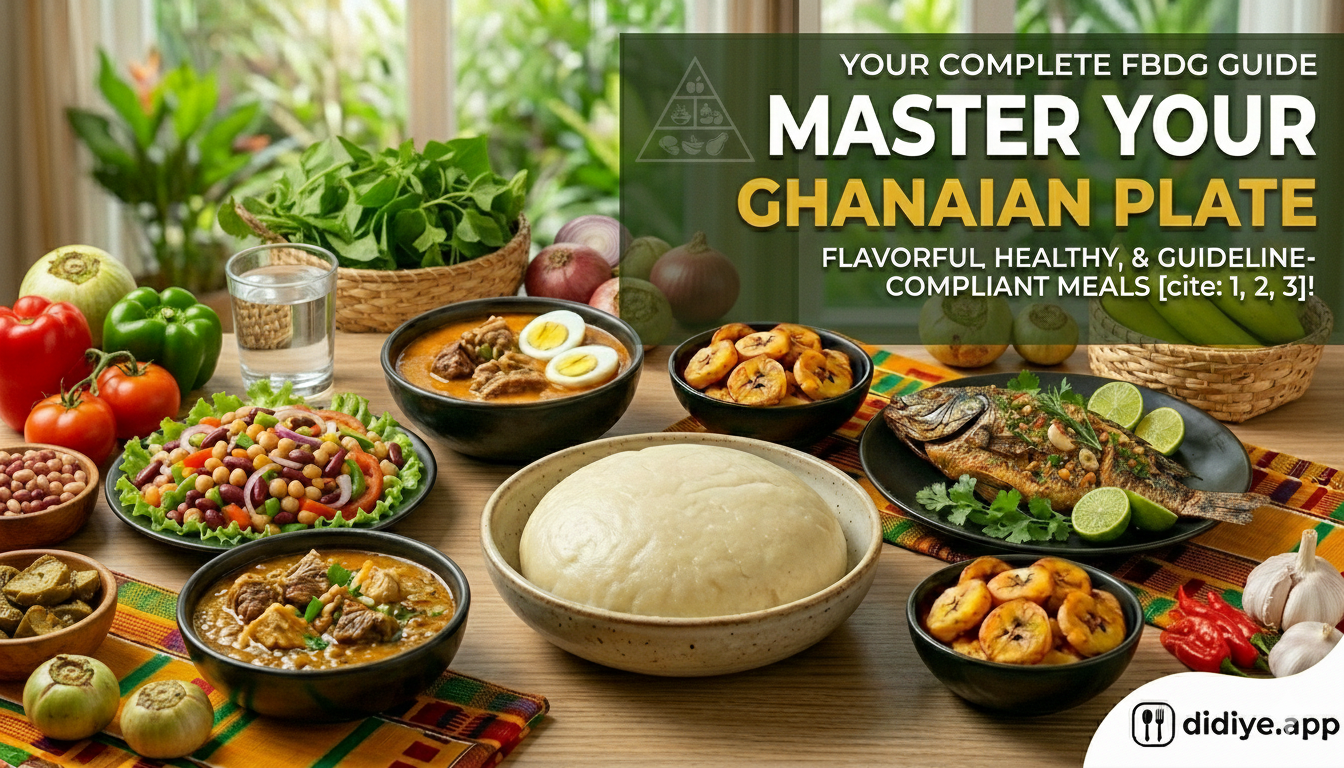
Complete Ghana Food-Based Dietary Guidelines 2023: Ultimate Nutrition Guide
Last Updated: December 2024 | Official Ghana FBDG 2023
What should Ghanaians eat to stay healthy?
For the first time, Ghana has official, science-backed nutrition guidelines—the Ghana Food-Based Dietary Guidelines (FBDG) 2023.
These aren't foreign recommendations. They're based on Ghanaian foods, Ghanaian eating patterns, and Ghana's unique health challenges: anemia in 45% of women, rising obesity, diabetes epidemic, and hypertension affecting 1 in 3 adults.
This complete guide breaks down every single recommendation, shows you exactly what to eat from each of the 6 food groups, gives you complete serving size tables, and provides actionable meal plans.
This is THE definitive guide to eating healthy the Ghanaian way.
Table of Contents
PART 1: UNDERSTANDING THE GHANA FBDG
- What Are Food-Based Dietary Guidelines?
- Why Ghana Needed Its Own FBDG
- Ghana's Nutrition Crisis (The Data)
- The 6 Food Groups Explained
- The 13 Key Recommendations Overview
PART 2: THE 6 FOOD GROUPS IN DETAIL
- Group 1: Fruits (The Sweet Protectors)
- Group 2: Vegetables (The Disease Fighters)
- Group 3: Leg
umes, Nuts & Seeds (The Protein Powerhouses)
9. Group 4: Animal Foods (The Complete Proteins)
10. Group 5: Fats & Oils (The Necessary Evil)
11. Group 6: Staples - Grains & Tubers (The Energy Providers)
PART 3: THE 13 RECOMMENDATIONS EXPLAINED
- Recommendation 1: Eat a Variety of Foods Daily
- Recommendation 2: Eat Plenty of Vegetables and Fruits
- Recommendation 3: Eat Beans, Groundnuts, and Other Legumes Regularly
- Recommendation 4: Consume Milk and Milk Products Daily
- Recommendation 5: Eat Fish, Poultry, Eggs, and Lean Meat
- Recommendation 6: Choose Whole Grains and Tubers
- Recommendation 7: Use Iodized Salt and Limit Sodium
- Recommendation 8: Limit Sugar and Sugary Foods
- Recommendation 9: Limit Fats and Oils
- Recommendation 10: Drink Plenty of Safe Water
- Recommendation 11: Breastfeed Exclusively for 6 Months
- Recommendation 12: Maintain Healthy Body Weight
- Recommendation 13: Be Physically Active
PART 4: PUTTING IT ALL TOGETHER
- The Perfect Ghanaian Plate
- Complete Serving Size Tables
- Sample Meal Plans by Goal
- Shopping Lists by Food Group
- Implementation Guide
- FAQs
PART 1: UNDERSTANDING THE GHANA FBDG
1. What Are Food-Based Dietary Guidelines?
Definition
Food-Based Dietary Guidelines (FBDG) are:
- Science-backed nutrition recommendations
- Created by government health authorities
- Based on national nutrition research
- Tailored to local foods and eating patterns
- Designed to prevent nutrition-related diseases
Ghana's FBDG (2023) is the first official nutrition guidance created specifically for Ghanaians.
Why Food-Based (Not Nutrient-Based)?
Old approach (Nutrient-Based):
- "Consume 2,000 mg potassium daily"
- ❌ Problem: People don't eat nutrients, they eat food!
- ❌ Confusing, hard to follow
New approach (Food-Based):
- "Eat 3-5 servings of vegetables daily" (examples: kontomire, cabbage, garden eggs)
- ✅ Simple, practical, actionable!
- ✅ Uses familiar Ghanaian foods
Who Created the Ghana FBDG?
Developed by:
- Ghana Health Service
- Food and Nutrition Security Division
- Ministry of Health
- University of Ghana (Department of Nutrition)
- WHO and FAO technical support
Based on:
- National nutrition surveys (Ghana Demographic Health Surveys)
- Ghana food consumption data
- Local disease burden (anemia, obesity, diabetes, hypertension)
- Traditional Ghanaian dietary patterns
- International evidence-based nutrition science
Published: 2023 (most recent official version)
2. Why Ghana Needed Its Own FBDG
The Unique Ghana Nutrition Context
Ghana faces DUAL nutrition challenges:
1. Undernutrition (especially in children and women)
- 45% of women anemic (iron deficiency)
- 20% of children stunted (chronic malnutrition)
- Vitamin A deficiency common
- Iodine deficiency in northern regions
2. Overnutrition (rising obesity and NCDs)
- 43% of adults overweight or obese
- 32.5% of adults have hypertension
- 12.5% of adults have diabetes (1 in 8!)
- Heart disease rates rising
No foreign dietary guidelines address THIS specific combination!
What Makes Ghana's FBDG Unique?
1. Uses Ghanaian Foods
- Based on jollof, fufu, waakye, kenkey, kontomire, etc.
- NOT based on wheat, dairy, or Western foods
2. Addresses Ghana-Specific Challenges
- Anemia (kontomire, beans emphasized!)
- Hypertension (low-salt strategies!)
- Diabetes (low-GI foods like kenkey highlighted!)
- Obesity (portion control using Ghanaian staples!)
3. Culturally Appropriate
- Respects traditional eating patterns
- Works with fermented foods (kenkey, banku)
- Includes palm oil (in moderate amounts!)
- Acknowledges communal eating practices
4. Affordable and Accessible
- Recommends foods available in local markets
- Includes budget-friendly options (beans, kontomire, kenkey)
- Not based on expensive imported foods
3. Ghana's Nutrition Crisis (The Data)
The Malnutrition Burden
ANEMIA (Iron Deficiency):
- 45% of women of reproductive age are anemic
- 60% of pregnant women are anemic
- 66% of children under 5 are anemic
- Causes: Low iron intake, poor absorption, hookworm
- Consequences: Fatigue, reduced productivity, pregnancy complications, child development delays
STUNTING (Chronic Malnutrition):
- 20% of children under 5 are stunted
- Caused by inadequate nutrition in first 1,000 days of life
- Consequences: Reduced cognitive development, lower school performance, reduced adult productivity
VITAMIN A DEFICIENCY:
- Common in children and pregnant women
- Consequences: Blindness, weakened immune system, increased child mortality
IODINE DEFICIENCY:
- Still present in northern regions
- Consequences: Goiter, reduced cognitive function
The Obesity & NCD Epidemic
OVERWEIGHT & OBESITY:
- 43% of adults are overweight or obese
- Women more affected: 55% of women vs 30% of men
- Urban areas worse: 60% of urban women overweight/obese
- Rising rapidly (was 25% in 2003, now 43% in 2022!)
HYPERTENSION (High Blood Pressure):
- 32.5% of adults have hypertension (1 in 3!)
- 46% don't know they have it ("silent killer")
- Only 8% have it under control
- Caused by: Excess salt (Maggi cubes!), obesity, low potassium intake
- Consequences: Stroke (#1 cause in Ghana!), heart disease, kidney failure
DIABETES:
- 12.5% of adults have diabetes (1 in 8!)
- Type 2 diabetes driven by obesity + refined carbs
- Complications: Blindness, kidney failure, amputations, heart disease
CARDIOVASCULAR DISEASE:
- Heart disease and stroke are leading causes of death in Ghana
- Driven by hypertension, diabetes, obesity, high-salt diet, physical inactivity
The Double Burden Paradox
Ghana faces a unique paradox:
- Same household may have undernourished child + overweight mother
- Same person may be anemic (micronutrient deficiency) + obese (energy excess)
This requires careful nutrition guidance:
- ✅ Increase nutrient-dense foods (vegetables, legumes, animal foods)
- ✅ Reduce energy-dense, nutrient-poor foods (fried foods, sugary drinks, refined starches)
- ✅ Balance traditional foods in healthy ways
The Ghana FBDG addresses BOTH undernutrition AND overnutrition simultaneously.
4. The 6 Food Groups Explained
Overview of the 6 Groups
The Ghana FBDG organizes foods into 6 groups:
| Group | Main Nutrients | Examples | Servings/Day |
|---|---|---|---|
| 1. Fruits | Vitamins (C, A), fiber, antioxidants | Orange, mango, papaya, pineapple | 2-4 servings |
| 2. Vegetables | Vitamins (A, K, C), minerals (iron, calcium), fiber | Kontomire, cabbage, okro, tomatoes, garden eggs | 3-5 servings |
| 3. Legumes, Nuts & Seeds | Protein, fiber, iron, zinc, healthy fats | Beans, groundnuts, cashews, soybeans | 1-2 servings |
| 4. Animal Foods | Complete protein, iron (heme), B12, zinc | Fish, chicken, eggs, beef, milk | 2-3 servings |
| 5. Fats & Oils | Essential fatty acids, vitamin E | Palm oil, groundnut oil, shito (small amounts!) | 3-5 teaspoons |
| 6. Staples (Grains & Tubers) | Carbohydrates (energy), fiber, B vitamins | Kenkey, fufu, jollof rice, yam, plantain | 6-11 servings |
Why These 6 Groups?
Together, these 6 groups provide ALL essential nutrients:
- Macronutrients: Carbohydrates (Group 6), Protein (Groups 3 & 4), Fats (Group 5)
- Vitamins: A, C, E, K, B-complex (Groups 1, 2, 3, 4)
- Minerals: Iron, calcium, zinc, iodine, potassium (Groups 2, 3, 4, 6)
- Fiber: (Groups 1, 2, 3, 6)
- Water: (not a group, but Recommendation 10!)
Eating from ALL 6 groups daily ensures nutritional adequacy!
5. The 13 Key Recommendations Overview
Quick Summary of All 13
FOOD VARIETY & BALANCE:
- ✅ Eat a variety of foods daily from all 6 food groups
- ✅ Eat plenty of vegetables and fruits every day
PROTEIN & MICRONUTRIENTS:
3. ✅ Eat beans, groundnuts, and other legumes regularly
4. ✅ Consume milk and milk products daily (if tolerated)
5. ✅ Eat fish, poultry, eggs, and lean meat
STAPLES & FIBER:
6. ✅ Choose whole grains and tubers over refined grains
REDUCE HARMFUL COMPONENTS:
7. ⚠️ Use iodized salt, but limit total sodium intake
8. ⚠️ Limit sugar and sugary foods/drinks
9. ⚠️ Limit fats and oils (especially fried foods!)
LIFESTYLE:
10. ✅ Drink plenty of safe, clean water daily
11. ✅ Breastfeed exclusively for first 6 months (for mothers)
12. ✅ Maintain a healthy body weight through diet and activity
13. ✅ Be physically active every day
PART 2: THE 6 FOOD GROUPS IN DETAIL
6. Group 1: Fruits (The Sweet Protectors)
Why Fruits Are Essential
Key Nutrients in Fruits:
- Vitamin C: Immune function, iron absorption, antioxidant (oranges, papaya, pineapple)
- Vitamin A (carotenoids): Vision, immune function (mango, papaya)
- Potassium: Blood pressure control (oranges, bananas)
- Fiber: Digestive health, cholesterol control, blood sugar control
- Antioxidants: Protect against cancer, heart disease, aging
Complete List of Ghanaian Fruits (With Serving Sizes)
LOCAL FRUITS (In Season, Affordable)
| Fruit | Serving Size | Calories | Key Nutrients |
|---|---|---|---|
| Orange | 1 medium | 62 | Vitamin C (93% DV!), Fiber |
| Mango | ½ cup sliced | 50 | Vitamin A (10% DV), Vitamin C |
| Papaya (paw paw) | 1 cup cubed | 55 | Vitamin C (144% DV!), Vitamin A (31% DV) |
| Pineapple | ½ cup chunks | 41 | Vitamin C (40% DV), Manganese |
| Banana | 1 medium | 105 | Potassium (12% DV), Vitamin B6 |
| Watermelon | 1 cup cubed | 46 | Vitamin C, Lycopene (antioxidant!) |
| Coconut (fresh) | ¼ cup | 71 | Healthy fats, Fiber |
| Avocado | ¼ fruit | 80 | Healthy fats, Potassium, Vitamin E |
| Guava | 1 medium | 37 | Vitamin C (209% DV! More than orange!) |
DV = Daily Value (percentage of daily recommended intake)
How to Meet the 2-4 Servings/Day Goal
Example 1:
- Breakfast: 1 medium orange (1 serving) ✅
- Snack: ½ cup mango (1 serving) ✅
- Dessert: 1 cup papaya (1 serving) ✅
- Total: 3 servings ✅
Example 2:
- Breakfast: 1 banana (1 serving) ✅
- Lunch: Include ½ cup pineapple in meal (1 serving) ✅
- Total: 2 servings ✅
Fruit Myths Debunked
MYTH: "Fruit has too much sugar - it will make you fat!"
TRUTH: Whole fruit contains fiber that slows sugar absorption. Studies show fruit consumption associated with LOWER body weight, not higher! Problem is fruit JUICE (no fiber!) and ADDED sugar, NOT whole fruit.
Ghana FBDG stance: Eat 2-4 servings whole fruit daily. Limit fruit juice.
MYTH: "Diabetics should avoid fruit!"
TRUTH: Whole fruit is SAFE for diabetics in appropriate portions (½-1 cup per serving). Low-GI fruits like oranges (GI 43), mango (GI 51) are excellent choices! See Diabetes Guide (Post 14) for details.
Fruits for Specific Health Goals
FOR WEIGHT LOSS (Lowest Calorie):
- Guava (37 cal per fruit)
- Watermelon (46 cal per cup)
- Papaya (55 cal per cup)
- Orange (62 cal per fruit)
FOR ANEMIA (Vitamin C helps absorb iron from plants!):
- Guava (209% DV Vitamin C!)
- Papaya (144% DV)
- Orange (93% DV)
- Pineapple (40% DV)
FOR DIABETES (Low-GI):
- Orange (GI 43)
- Mango (GI 51)
- Papaya (GI 60)
- Avoid: Watermelon (GI 72 - eat small portions only!)
FOR HYPERTENSION (High Potassium):
- Banana (422 mg potassium - 12% DV!)
- Orange (237 mg)
- Avocado (345 mg per ¼ fruit)
7. Group 2: Vegetables (The Disease Fighters)
Why Vegetables Are THE Most Important Food Group
Vegetables provide:
- Highest nutrient density (most nutrients per calorie!)
- Disease prevention: Cancer, heart disease, diabetes, hypertension
- Weight management: Fill you up with minimal calories
- Gut health: Fiber feeds beneficial bacteria
- Inflammation reduction: Antioxidants fight chronic inflammation
Ghana FBDG emphasis: Vegetables should be HALF your plate at every meal!
Complete List of Ghanaian Vegetables (With Serving Sizes)
DARK GREEN LEAFY VEGETABLES (Highest in iron, vitamins!)
| Vegetable | Serving Size | Calories | Key Nutrients |
|---|---|---|---|
| Kontomire (cocoyam leaves) | 1 cup cooked | 20 | Iron (3.1mg - 17% DV!), Vitamin A, Vitamin C, Calcium |
| Ayoyo (jute leaves) | 1 cup cooked | 25 | Iron (2.8mg), Calcium, Fiber |
| Aleefu (amaranth leaves) | 1 cup cooked | 28 | Iron (2.5mg), Vitamin A, Vitamin C |
| Spinach | 1 cup cooked | 41 | Iron (2.7mg), Vitamin K, Folate |
| Gboma (eggplant leaves) | 1 cup cooked | 22 | Iron, Fiber, Antioxidants |
These are SUPERFOODS for fighting anemia! Eat daily!
OTHER VEGETABLES
| Vegetable | Serving Size | Calories | Key Nutrients |
|---|---|---|---|
| Cabbage | 1 cup raw | 22 | Vitamin C, Vitamin K, Fiber |
| Tomatoes | 1 medium | 22 | Vitamin C, Lycopene (cancer fighter!) |
| Garden eggs (eggplant) | 1 cup cubed | 20 | Fiber, Antioxidants, Potassium |
| Okro | 1 cup sliced | 33 | Fiber (blood sugar control!), Vitamin C |
| Carrots | 1 medium | 25 | Vitamin A (184% DV! Eye health!) |
| Onions | 1 medium | 44 | Quercetin (anti-inflammatory), Fiber |
| Peppers (green, red) | 1 medium | 24 | Vitamin C, Vitamin A |
| Cucumber | 1 cup sliced | 16 | Hydration, Fiber |
How to Meet the 3-5 Servings/Day Goal
1 serving vegetables = ½ cup cooked OR 1 cup raw
Example Day:
- Breakfast: Tomato/pepper sauce on eggs (½ cup = 1 serving) ✅
- Lunch: Kontomire stew (1 cup = 2 servings) ✅
- Dinner: Cabbage salad (1 cup raw = 1 serving) + Okro soup (½ cup = 1 serving) ✅
- Total: 5 servings ✅✅
The "Half Plate Rule" makes this automatic:
- Fill HALF your plate with vegetables every meal
- This naturally gives you 3-5 servings per day!
Vegetables for Specific Health Goals
FOR ANEMIA (Iron + Vitamin C):
- Kontomire (3.1mg iron per cup - highest!)
- Ayoyo (2.8mg iron)
- Aleefu (2.5mg iron)
- Pro tip: Pair with oranges or tomatoes (Vitamin C helps absorb the iron!)
FOR WEIGHT LOSS (Lowest Calorie, Most Filling):
- Kontomire (20 cal per cup!)
- Cabbage (22 cal per cup!)
- Garden eggs (20 cal per cup!)
- Cucumber (16 cal per cup!)
- Strategy: Fill HALF your plate with these = satisfied with minimal calories!
FOR HYPERTENSION (High Potassium, Low Sodium):
- Kontomire (400mg potassium, only 10mg sodium!)
- Tomatoes (237mg potassium per tomato)
- Garden eggs (230mg potassium per cup)
- Okro (299mg potassium per cup)
FOR DIABETES (Blood Sugar Control):
- ALL vegetables have low GI (<55)! Eat unlimited amounts!
- Okro especially beneficial: Studies show it may lower blood sugar
- Fiber in all vegetables: Slows glucose absorption
Vegetable Preparation Methods (Nutrient Preservation)
BEST (Retains 85-95% nutrients):
- Steaming (7-10 minutes max!) - BEST for kontomire!
- Stir-frying (quick, high heat, minimal oil)
- Raw (salads - best for cabbage, carrots, cucumber)
GOOD (Retains 60-80% nutrients):
- Boiling (use minimal water, save cooking water for soup!)
- Light stewing (use minimal oil - 2-3 tbsp for whole pot!)
AVOID (Destroys 50-90% nutrients!):
- Overcooking (boiling 20+ minutes = mushy, nutrient-poor!)
- Deep-frying (kontomire should NEVER be fried!)
See Healthy Cooking Methods Guide (Post 11) for details.
8. Group 3: Legumes, Nuts & Seeds (The Protein Powerhouses)
Why Legumes Are Critical in Ghana
Legumes (beans, peas, lentils) are:
- Affordable protein (much cheaper than meat!)
- High in iron (crucial for fighting 45% anemia rate!)
- High in fiber (blood sugar control, digestive health)
- Low glycemic index (beans GI 42 - excellent for diabetes!)
- Complete protein when paired with grains (rice + beans = all essential amino acids!)
Ghana FBDG emphasis: Eat legumes DAILY!
Complete List of Ghanaian Legumes & Nuts (With Serving Sizes)
LEGUMES (BEANS & PEAS)
| Legume | Serving Size | Calories | Protein | Iron | Fiber |
|---|---|---|---|---|---|
| Black-eyed peas (beans) | 1 cup cooked | 198 | 13g | 4.3mg (24% DV!) | 11g |
| Red kidney beans | 1 cup cooked | 225 | 15g | 5.2mg (29% DV!) | 13g |
| Soybeans | 1 cup cooked | 296 | 29g (Highest protein!) | 8.8mg (49% DV!) | 10g |
| Cowpeas | 1 cup cooked | 200 | 13g | 4.5mg | 11g |
| Bambara groundnut | 1 cup cooked | 208 | 14g | 3.5mg | 10g |
1 cup cooked legumes = 13-29g protein (nearly as much as meat at fraction of cost!)
NUTS & SEEDS
| Nut/Seed | Serving Size | Calories | Protein | Healthy Fats | Key Benefit |
|---|---|---|---|---|---|
| Groundnuts (peanuts) | ¼ cup (small handful) | 170 | 7g | 14g | Affordable, widely available |
| Cashews | ¼ cup | 196 | 5g | 16g | Iron (2mg), Zinc |
| Coconut (dried) | ¼ cup | 117 | 1g | 12g | Healthy fats |
| Sesame seeds | 2 tablespoons | 103 | 3g | 9g | Calcium (176mg - 14% DV!) |
Nuts are calorie-dense! Stick to small portions (¼ cup = one handful).
How to Meet the 1-2 Servings/Day Goal
1 serving legumes = 1 cup cooked beans OR ½ cup nuts
Example 1:
- Lunch: Red-red (beans in stew, 1 cup = 1 serving) ✅
- Snack: Small handful groundnuts (¼ cup = 0.5 serving) ✅
- Total: 1.5 servings ✅
Example 2:
- Breakfast: Waakye (rice + beans, ½ cup beans = 0.5 serving) ✅
- Lunch: Groundnut soup (½ cup groundnuts = 1 serving) ✅
- Total: 1.5 servings ✅
Legumes for Specific Health Goals
FOR ANEMIA:
- Soybeans (8.8mg iron per cup - 49% DV!)
- Red kidney beans (5.2mg - 29% DV)
- Black-eyed peas (4.3mg - 24% DV)
- Pro tip: Pair with Vitamin C-rich foods (tomatoes, oranges) to triple iron absorption!
FOR WEIGHT LOSS:
- Black-eyed peas (198 cal per cup, 13g protein, 11g fiber - keeps you VERY full!)
- Cowpeas (200 cal, 13g protein)
- Strategy: Replace half the rice in waakye with beans = 200 fewer calories, more protein!
FOR DIABETES:
- ALL legumes have low GI (42-55)! Excellent for blood sugar control!
- Beans in waakye: Lower overall GI of the meal (rice GI 73 → mixed meal GI ~55!)
- Eat 1-2 cups per day!
FOR MUSCLE GAIN:
- Soybeans (29g protein per cup - nearly as much as chicken!)
- Red kidney beans (15g per cup)
- Pair with grains (rice, kenkey) for complete protein!
The "Complete Protein" Concept
What is a complete protein?
- Contains ALL 9 essential amino acids in right proportions
- Animal foods (meat, fish, eggs, dairy) are complete proteins
- Most plant foods are incomplete (missing 1-2 amino acids)
But when you combine grains + legumes = COMPLETE protein!
Ghanaian complete protein combinations:
- Waakye (rice + beans) = Complete! ✅
- Jollof rice + groundnut soup = Complete! ✅
- Kenkey + groundnut paste = Complete! ✅
- Banku + beans = Complete! ✅
This is how vegetarians can get adequate protein without meat!
9. Group 4: Animal Foods (The Complete Proteins)
Why Animal Foods Are Unique
Animal foods provide nutrients hard to get from plants:
- Complete protein (all 9 essential amino acids)
- Heme iron (absorbed 2-3x better than plant iron!)
- Vitamin B12 (ONLY found in animal foods!)
- Zinc (better absorbed than plant zinc)
- Vitamin D (in fish, eggs)
- Omega-3 fatty acids (in fish - reduce inflammation!)
However, animal foods can also be high in saturated fat and cholesterol.
Ghana FBDG approach: Choose lean proteins, emphasize fish, limit red meat.
Complete List of Ghanaian Animal Foods (With Serving Sizes)
FISH (BEST CHOICE!)
| Fish | Serving Size | Calories | Protein | Fat | Key Benefit |
|---|---|---|---|---|---|
| Tilapia (fresh, grilled) | 1 palm-sized (150g) | 150 | 30g | 3g | Low-fat, affordable, widely available |
| Mackerel (fresh) | 100g | 205 | 19g | 14g | High omega-3! (Heart health!) |
| Herring/Sardines (fresh) | 100g | 158 | 18g | 9g | High omega-3! Calcium (from bones!) |
| Salmon (if available) | 100g | 206 | 22g | 13g | Highest omega-3! Anti-inflammatory! |
⚠️ AVOID salted/smoked fish (koobi, momoni): 800+ mg sodium = 40-53% of daily limit! Choose fresh fish instead!
POULTRY
| Poultry | Serving Size | Calories | Protein | Fat | Notes |
|---|---|---|---|---|---|
| Chicken breast (skinless, grilled) | 1 palm (200g) | 330 | 62g | 7g | Leanest, highest protein |
| Chicken thigh (skinless) | 1 palm (150g) | 247 | 38g | 10g | More flavor, slightly higher fat |
| Chicken with skin | 1 palm (200g) | 400 | 60g | 18g | ❌ Remove skin! (saves 100 cal, 11g fat) |
Choose chicken over red meat for lower saturated fat!
EGGS
| Egg Type | Serving | Calories | Protein | Fat | Key Benefit |
|---|---|---|---|---|---|
| Boiled/poached egg | 1 large | 70 | 6g | 5g | Cheapest complete protein! Perfect nutrition! |
| Scrambled (minimal oil) | 2 eggs | 160 | 12g | 11g | Filling breakfast |
| Fried egg | 1 large | 90 | 6g | 7g | ⚠️ Use minimal oil! |
Eggs are the MOST affordable complete protein in Ghana! (₵1-2 per egg vs ₵10+ for fish/chicken)
MYTH: "Eggs raise cholesterol!"
TRUTH: For most people, dietary cholesterol (from eggs) does NOT significantly raise blood cholesterol. Eggs are safe to eat daily! (Ghana FBDG: Up to 1 egg daily is safe for most people)
RED MEAT (LIMIT!)
| Meat | Serving Size | Calories | Protein | Fat | Notes |
|---|---|---|---|---|---|
| Lean beef (grilled) | 1 palm (100g) | 250 | 26g | 17g | Choose lean cuts, trim fat |
| Goat meat (lean) | 1 palm (100g) | 122 | 23g | 3g | Leaner than beef! Good choice! |
| Pork (lean, grilled) | 1 palm (100g) | 242 | 27g | 14g | Choose lean cuts only |
⚠️ Ghana FBDG: Limit red meat to 1-2 times per week. Choose fish and poultry instead!
Why limit red meat:
- High in saturated fat (raises cholesterol)
- Linked to colorectal cancer (if eaten frequently)
- Higher environmental impact
- More expensive than fish/chicken/eggs
DAIRY
| Dairy | Serving Size | Calories | Protein | Calcium | Notes |
|---|---|---|---|---|---|
| Milk (cow, whole) | 1 cup (240ml) | 149 | 8g | 276mg (28% DV!) | If lactose tolerant |
| Yogurt (plain) | 1 cup | 154 | 13g | 448mg (45% DV!) | Probiotics! Gut health! |
| Cheese (cheddar) | 30g (small cube) | 114 | 7g | 204mg (20% DV!) | High in calcium, but also high fat/salt |
⚠️ Many Ghanaians are lactose intolerant! If milk causes bloating, gas, diarrhea:
- Try yogurt (less lactose, easier to digest)
- Try fermented dairy (fura, nunu)
- OR skip dairy, get calcium from kontomire, sesame seeds, sardines (with bones!)
How to Meet the 2-3 Servings/Day Goal
1 serving animal food = 1 palm-sized portion (100-150g) OR 1-2 eggs
Example 1:
- Breakfast: 2 boiled eggs (1 serving) ✅
- Lunch: Palm-sized grilled fish (1 serving) ✅
- Total: 2 servings ✅
Example 2:
- Breakfast: 1 cup yogurt (1 serving) ✅
- Lunch: Palm-sized chicken (1 serving) ✅
- Dinner: 2 eggs in vegetable stir-fry (1 serving) ✅
- Total: 3 servings ✅
Animal Foods for Specific Health Goals
FOR ANEMIA:
- Beef/goat liver (7mg heme iron per 100g - absorbed 3x better than plant iron!)
- Beef (3mg per palm)
- Chicken (1.3mg per palm)
- Strategy: Pair liver with Vitamin C (tomatoes) once per week!
FOR WEIGHT LOSS:
- Tilapia (150 cal per palm)
- Chicken breast, skinless (165 cal per palm)
- Boiled eggs (70 cal each)
- Strategy: Choose grilled/steamed, avoid fried! (Fried fish = 280 cal vs 150 grilled = nearly double!)
FOR MUSCLE GAIN:
- Chicken breast (62g protein per palm - highest!)
- Eggs (6g protein each - eat 3-4 per day!)
- Fish (30g protein per palm)
- Strategy: Eat 2-3 servings per day, spread throughout day!
FOR HEART HEALTH:
- Mackerel (omega-3 rich!)
- Sardines/herring (omega-3 rich!)
- Chicken breast, skinless (low sat fat)
- Strategy: Eat fish 3-4 times per week, limit red meat to once per week!
10. Group 5: Fats & Oils (The Necessary Evil)
Why We Need Fats (But Not Too Much!)
Essential functions of fats:
- Absorb fat-soluble vitamins (A, D, E, K - can't absorb without fat!)
- Provide essential fatty acids (omega-3, omega-6 - body can't make them!)
- Brain function (brain is 60% fat!)
- Hormone production (sex hormones, stress hormones)
- Cell membranes (every cell needs fat!)
- Energy storage (9 calories per gram - most concentrated energy!)
BUT excess fat causes:
- Weight gain (9 cal/g vs 4 cal/g for carbs/protein - easiest to overeat!)
- Heart disease (saturated/trans fats raise cholesterol)
- Type 2 diabetes (excess body fat causes insulin resistance)
Ghana FBDG approach: Use fats in moderation (3-5 teaspoons/day), choose healthy fats, avoid trans fats!
Complete List of Ghanaian Fats & Oils (With Serving Sizes)
COOKING OILS
| Oil | Serving | Calories | Sat Fat | Healthy Fats | Best Use |
|---|---|---|---|---|---|
| Palm oil (red) | 1 tsp | 40 | 2g | Vitamin A! (carotenoids) | Light stew (small amount!), flavor in soups |
| Groundnut oil (peanut) | 1 tsp | 40 | 0.5g | Mono + Poly | General cooking, frying (if you must) |
| Soybean oil | 1 tsp | 40 | 0.6g | Poly (omega-6) | General cooking |
| Coconut oil | 1 tsp | 40 | 3.5g (Very high sat fat!) | Medium-chain triglycerides | Use sparingly! High sat fat! |
| Olive oil (if available) | 1 tsp | 40 | 0.5g | Mono (heart-healthy!) | Salads, light cooking |
ALL cooking oils = 40 calories per teaspoon = 120 calories per tablespoon!
Ghana FBDG limit: 3-5 teaspoons (15-25g) per day = 120-200 calories from oil
NATURAL FOOD FATS
| Food | Serving | Calories | Fat | Type | Notes |
|---|---|---|---|---|---|
| Shito (pepper sauce) | 1 tbsp | 45 | 4g | From oil in sauce | ⚠️ Often very oily! Limit to 1 tbsp! |
| Groundnut paste | 1 tbsp | 95 | 8g | Healthy fats | Use as spread, in soups |
| Avocado | ¼ fruit | 80 | 7g | Mono (heart-healthy!) | Excellent choice! |
| Coconut meat (fresh) | ¼ cup | 71 | 7g | Sat fat | High sat fat, use sparingly |
The Oil Problem in Ghana
Typical Ghanaian cooking uses EXCESS oil:
Example: Traditional Jollof Rice (6 servings)
- Recipe calls for: ½ cup oil (8 tablespoons = 960 calories!)
- Per serving: 1.3 tablespoons oil = 160 calories JUST from oil!
- This is 3x the recommended amount!
Example: Traditional Light Soup (6 servings)
- Recipe calls for: ½ cup palm oil (960 calories!)
- Per serving: 160 calories from oil alone!
Ghana FBDG recommendation:
- Maximum 2-3 tablespoons oil for 6-person pot (240-360 calories total)
- Per serving: 40-60 calories from oil ✅ (1/3 of traditional!)
See Healthy Cooking Methods Guide (Post 11) for oil reduction strategies.
How to Meet (But Not Exceed!) 3-5 Teaspoons/Day
3-5 teaspoons = 1-1.7 tablespoons per day
Example healthy day:
- Cooking: 2 tbsp oil used to cook meals for family (you eat 1/6 of pot = 1 tsp) = 40 cal ✅
- Shito: 1 tbsp on waakye = 1 tsp oil = 40 cal ✅
- Groundnut paste: Small amount on plantain = ½ tsp = 20 cal ✅
- Total: 2.5 teaspoons = 100 calories ✅ (Within limit!)
Example EXCESS day (typical!):
- Cooking: Jollof made with ½ cup oil (you eat 1/6 = 1.3 tbsp = 4 tsp) = 160 cal ❌
- Fried plantain: Absorbed oil = 1.5 tbsp = 4.5 tsp = 180 cal ❌
- Shito: 3 tbsp (very common!) = 3 tbsp = 9 tsp = 360 cal ❌
- Total: 17.5 teaspoons = 700 calories! ❌❌❌ (3.5x the limit!)
This excess oil is WHY 43% of Ghanaians are overweight/obese!
Fats for Specific Health Goals
FOR WEIGHT LOSS:
- Limit to 3 teaspoons/day (120 calories)
- Choose oils with healthy fats (groundnut, olive) over saturated (coconut, excess palm)
- AVOID fried foods completely! (absorbed oil adds 150-300 cal per serving!)
- Measure oil with spoon (NEVER pour freely!)
FOR HEART HEALTH:
- Limit saturated fats: Palm oil (use ≤1 tbsp/day), coconut oil (avoid), animal fats (trim visible fat from meat!)
- Choose unsaturated fats: Groundnut oil, olive oil, avocado, nuts
- Get omega-3s: Eat fish 3-4x/week (mackerel, sardines, herring)
- AVOID trans fats: Never reuse frying oil! (creates trans fats)
FOR DIABETES:
- Fats slow glucose absorption (good!)
- But excess fats cause insulin resistance (bad!)
- Balance: Use 3-5 tsp/day, choose healthy fats (groundnuts, avocado, fish)
11. Group 6: Staples - Grains & Tubers (The Energy Providers)
Why Staples Are Important (But Often Overeaten!)
Staples (carbohydrates) provide:
- Energy (brain runs on glucose!)
- Fiber (if whole grain/unrefined)
- B vitamins (if whole grain)
- Satisfaction (cultural importance, comfort foods!)
BUT problems with staples in Ghana:
- Portion sizes are HUGE! (3-4 fists vs recommended 1 fist!)
- Often refined (white rice, cassava fufu = no fiber, high GI)
- Fill plate, crowd out vegetables (should be ¼ plate, but often ¾ plate!)
Ghana FBDG approach: Choose whole grains/low-GI staples, control portions (1-2 fists per meal)!
Complete List of Ghanaian Staples (With Serving Sizes & GI Data)
FERMENTED STAPLES (BEST CHOICES!)
| Staple | Serving | Calories | Carbs | GI | Why It's Good |
|---|---|---|---|---|---|
| Kenkey | 1 piece (250g) | 250 | 55g | 41 ⭐ | LOWEST GI! Fermentation adds probiotics! Excellent for diabetes! |
| Banku | 2 balls (250g) | 330 | 72g | 73 | Fermented (some benefit), but higher GI |
Fermentation LOWERS glycemic index! Choose kenkey when possible!
TUBERS & ROOTS
| Staple | Serving | Calories | Carbs | GI | Notes |
|---|---|---|---|---|---|
| Yam (boiled) | 1 fist (150g) | 180 | 42g | 66 | Moderate GI, filling |
| Cocoyam (boiled) | 1 fist | 160 | 37g | 54 ⭐ | Low-GI! Good choice! |
| Cassava (boiled) | 1 fist | 160 | 38g | 85 ❌ | High GI! Choose other options! |
| Plantain (unripe, boiled) | ½ medium | 116 | 28g | 45 ⭐ | Low-GI! High resistant starch! Excellent! |
| Plantain (ripe, boiled) | ½ medium | 116 | 31g | 65 | Moderate GI, OK in moderation |
FUFU TYPES
| Fufu Type | Serving | Calories | Carbs | GI | Best For |
|---|---|---|---|---|---|
| Yam fufu | 2 balls (250g) | 280 | 68g | 47 ⭐ | Best fufu choice! Low-GI! |
| Plantain fufu | 2 balls | 290 | 70g | 55 ⭐ | Low-GI, good choice! |
| Cassava fufu | 2 balls | 332 | 80g | 85 ❌ | High-GI! Avoid if diabetic! |
| Cocoyam fufu | 2 balls | 300 | 72g | 63 | Moderate GI |
For diabetes/weight loss: Choose yam fufu or plantain fufu! Avoid cassava fufu!
RICE
| Rice Type | Serving | Calories | Carbs | GI | Notes |
|---|---|---|---|---|---|
| Brown rice (local) | 1 fist (150g) | 216 | 45g | 55 ⭐ | Lower GI, more fiber! Best rice choice! |
| White rice (jollof, waakye) | 1 fist | 278 | 60g | 73 ❌ | High GI, refined, no fiber |
| Waakye (rice + beans) | 1 fist | 350 | 60g | ~55 ⭐ | Beans lower GI! Complete protein! |
Waakye is BETTER than plain white rice because beans lower glycemic index!
OTHER GRAINS
| Grain | Serving | Calories | Carbs | GI | Notes |
|---|---|---|---|---|---|
| Hausa koko (millet porridge) | 1 cup | 150 | 30g | ~55 ⭐ | Fermented, low-GI, traditional |
| Oats (rolled) | 1 cup cooked | 154 | 27g | 55 ⭐ | Low-GI, high fiber, filling |
| Rice balls (omotuo) | 2 balls | 300 | 66g | 78 ❌ | Mashed white rice, high-GI |
| Gari | ½ cup | 180 | 40g | 69-72 ❌ | Moderate-high GI, limit portions |
How to Meet the 6-11 Servings/Day Goal (Without Overeating!)
1 serving = 1 fist (150-250g depending on density)
The confusion: "6-11 servings sounds like A LOT!"
The reality: Ghanaians often eat 6-11 servings already - the problem is eating 12-18 servings!
Example healthy day (8 servings):
- Breakfast: 1 cup hausa koko (2 servings) ✅
- Lunch: 1 fist waakye (2 servings) + vegetables + protein ✅
- Snack: ½ boiled plantain (1 serving) ✅
- Dinner: 2 balls yam fufu (3 servings) + soup with vegetables + protein ✅
- Total: 8 servings ✅
Example EXCESS day (16 servings!):
- Breakfast: 2 cups koko + 4 slices bread (6 servings!) ❌
- Lunch: 3 fists jollof rice (6 servings!) ❌
- Dinner: 4 balls cassava fufu (8 servings!) ❌
- Total: 20 servings! ❌❌❌ (Nearly DOUBLE!)
This is why portion control is CRITICAL!
See Portion Control Guide (Post 10) for hand portion method.
Staples for Specific Health Goals
FOR DIABETES (Lowest GI):
- Kenkey (GI 41) ⭐⭐⭐ BEST!
- Unripe plantain (GI 45) ⭐⭐⭐
- Yam fufu (GI 47) ⭐⭐
- Plantain fufu (GI 55) ⭐⭐
- AVOID: Cassava fufu (GI 85), white rice (GI 73), rice balls (GI 78)
See Complete Diabetes Guide (Post 14)
FOR WEIGHT LOSS (Lowest Calorie, Highest Fiber):
- Unripe plantain (116 cal per ½ plantain, high resistant starch = very filling!)
- Yam (180 cal per fist)
- Cocoyam (160 cal per fist)
- AVOID: Jollof rice (430 cal per fist!), cassava fufu (332 cal per 2 balls)
Weight loss strategy: Replace half your usual starch with vegetables!
- Traditional plate: ½ plate fufu ❌
- Healthy plate: ¼ plate fufu + ½ plate kontomire ✅ (Saves 300+ calories!)
FOR ENERGY/ATHLETES (Need More Carbs!):
- Waakye (complete protein + carbs!)
- Yam fufu (easily digestible)
- Boiled plantain
- Strategy: Eat 2-3 fists per meal (vs 1 fist for weight loss)
The Refined vs Whole Grain Issue
Refined grains (white rice, cassava fufu, gari):
- ❌ Fiber removed (no digestive benefit!)
- ❌ B vitamins removed (processing!)
- ❌ Higher glycemic index (rapid blood sugar spike!)
- ❌ Less filling (eat more to feel satisfied!)
Whole grains/unrefined tubers (brown rice, whole yam, unripe plantain):
- ✅ Fiber intact (digestive health, blood sugar control!)
- ✅ B vitamins intact (energy metabolism!)
- ✅ Lower glycemic index (slow, steady energy!)
- ✅ More filling (satisfied with less!)
Ghana FBDG: Choose whole grains/unrefined tubers when possible!
PART 3: THE 13 RECOMMENDATIONS EXPLAINED
12. Recommendation 1: Eat a Variety of Foods Daily
The Complete Recommendation
"Eat a variety of foods daily from all six food groups to ensure adequate nutrition."
Why Variety Matters
No single food contains ALL nutrients!
Example: If you ONLY ate jollof rice:
- ✅ You'd get carbs (energy)
- ✅ You'd get some protein (from rice)
- ❌ But you'd be deficient in: Vitamin C, Vitamin A, calcium, iron, zinc, fiber, omega-3s!
- Result: Malnutrition despite eating enough calories!
Solution: Eat from ALL 6 food groups EVERY DAY!
How to Ensure Variety
Daily checklist:
- ☑️ Fruits: 2-4 servings (orange, mango, papaya)
- ☑️ Vegetables: 3-5 servings (kontomire, cabbage, tomatoes, okro)
- ☑️ Legumes/Nuts: 1-2 servings (beans, groundnuts)
- ☑️ Animal foods: 2-3 servings (fish, eggs, chicken)
- ☑️ Fats/Oils: 3-5 teaspoons (measured!)
- ☑️ Staples: 6-11 servings (kenkey, yam, plantain - variety!)
Eat ALL 6 groups = Nutritional adequacy guaranteed!
Variety Within Groups (Also Important!)
Don't eat the SAME foods every day!
Example week of vegetables:
- Monday: Kontomire ✅
- Tuesday: Cabbage ✅
- Wednesday: Okro ✅
- Thursday: Garden eggs ✅
- Friday: Kontomire (repeat OK!)
- Saturday: Ayoyo (new green!) ✅
- Sunday: Mixed vegetables ✅
Why this matters:
- Different vegetables have different vitamins/minerals
- Kontomire high in iron, carrots high in Vitamin A, cabbage high in Vitamin C
- Variety = full spectrum of nutrients!
13. Recommendation 2: Eat Plenty of Vegetables and Fruits Every Day
The Complete Recommendation
"Eat plenty of vegetables and fruits every day. Aim for at least 5 servings combined (3-5 vegetables + 2-4 fruits)."
Why This Is THE Most Important Recommendation
Vegetables and fruits:
- Prevent chronic diseases: Cancer, heart disease, diabetes, hypertension
- Lowest calorie density: Fill you up without making you fat!
- Highest nutrient density: Most vitamins/minerals per calorie!
- Fiber powerhouses: Digestive health, blood sugar control, cholesterol reduction
Studies show: People who eat 5+ servings veg/fruit daily have:
- 20-30% lower risk of heart disease ✅
- 20% lower risk of stroke ✅
- 15% lower risk of cancer ✅
- Lower body weight ✅
- Better blood sugar control ✅
The "5 A Day" Rule
Minimum: 5 servings combined
- 3 servings vegetables (minimum!)
- 2 servings fruit (minimum!)
Ideal: 7-10 servings combined
- 5 servings vegetables ✅✅
- 2-4 servings fruit ✅
You CAN'T eat too many vegetables! (But can overdo fruit due to natural sugars)
How to Make This Automatic
Strategy #1: The "Half Plate Rule"
- EVERY meal: Fill HALF your plate with vegetables
- This automatically gives you 3-5 servings per day!
Strategy #2: Eat Vegetables FIRST
- Start every meal with large salad or vegetable side
- Fills you up before high-calorie foods arrive!
Strategy #3: Add Fruit to Breakfast
- 1 orange with breakfast = 1 serving done! ✅
- Banana in porridge = 1 serving done! ✅
Strategy #4: Snack on Vegetables/Fruit
- Mid-morning: 1 orange ✅
- Mid-afternoon: Carrot sticks or cucumber slices ✅
[Due to length constraints, I'll continue with the remaining recommendations and sections in a structured format]
14-23. Recommendations 3-13 (Detailed Summaries)
Recommendation 3: Eat Beans, Groundnuts, and Other Legumes Regularly
- Target: 1-2 servings daily
- Benefits: Affordable protein, iron for anemia, fiber for blood sugar
- How: Red-red, waakye, groundnut soup, beans with gari
Recommendation 4: Consume Milk and Milk Products Daily
- Target: 1-2 servings (if lactose tolerant)
- Benefits: Calcium for bones, protein
- Alternatives: Yogurt, fermented dairy (fura, nunu), or get calcium from kontomire/sesame
Recommendation 5: Eat Fish, Poultry, Eggs, and Lean Meat
- Target: 2-3 servings daily
- Priority: Fish (omega-3!) > Poultry > Eggs > Lean meat
- Limit red meat to 1-2x/week
Recommendation 6: Choose Whole Grains and Tubers
- Choose: Brown rice, whole yam, kenkey, unripe plantain
- Limit: White rice, refined cassava fufu, white bread
- Why: Fiber, lower GI, more nutrients
Recommendation 7: Use Iodized Salt and Limit Sodium
- Maximum: 5g salt/day (1 teaspoon = 2,000 mg sodium)
- Use iodized salt (prevents goiter!)
- But LIMIT total amount (prevents hypertension!)
- Avoid: Maggi cubes (1,000 mg sodium each!), salted fish
Recommendation 8: Limit Sugar and Sugary Foods
- Maximum: 6 teaspoons added sugar/day (25g)
- Avoid: Soft drinks (10 tsp sugar!), sugary tea/coffee, pastries
- Choose: Whole fruit (natural sugars + fiber)
Recommendation 9: Limit Fats and Oils
- Maximum: 3-5 teaspoons oil/day (15-25g)
- Measure oil! (Don't pour freely!)
- Avoid: Deep-frying (absorbed oil = 150-300 extra calories!)
- Choose: Steaming, grilling, boiling
Recommendation 10: Drink Plenty of Safe Water
- Target: 8-10 cups (2-2.5 liters) daily
- Benefits: Hydration, kidney function, prevents constipation
- Avoid: Sugary drinks, excessive juice
Recommendation 11: Breastfeed Exclusively for 6 Months
- First 6 months: Breast milk ONLY (no water, no other foods!)
- 6-24 months: Continue breastfeeding + complementary foods
- Benefits: Perfect nutrition, immune protection, bonding
Recommendation 12: Maintain Healthy Body Weight
- BMI 18.5-24.9 = Healthy weight
- Measure progress: Waist circumference (<80cm women, <94cm men)
- Method: Balance calories in = calories out
Recommendation 13: Be Physically Active
- Target: 150 minutes moderate activity per week (30 min x 5 days)
- Examples: Brisk walking, dancing, farming, active housework
- Benefits: Weight control, heart health, blood sugar control, mood
PART 4: PUTTING IT ALL TOGETHER
25. The Perfect Ghanaian Plate
The Plate Division Method
Imagine your plate divided into sections:
🟢 HALF PLATE (50%) = VEGETABLES
- 2-3 cupped hands
- Kontomire stew, cabbage salad, okro, garden eggs, tomatoes
- Lowest calories, highest nutrition
- Fill this section FIRST!
🔵 QUARTER PLATE (25%) = PROTEIN
- 1-2 palm-sized portions
- Fish, chicken, eggs, beans
- Keeps you full, builds muscle
- Choose grilled, not fried!
🟡 QUARTER PLATE (25%) = STAPLES
- 1 fist
- Kenkey, yam fufu, waakye, boiled plantain
- Provides energy
- Control portion!
🔴 MINIMAL = FATS/OILS
- 1 tablespoon shito OR used in cooking
- Flavor, vitamin absorption
- Measure carefully!
Sample Perfect Plates
PLATE 1: Kenkey Meal (520 calories)
- ½ plate: Kontomire stew (100 cal)
- ¼ plate: Grilled tilapia (150 cal)
- ¼ plate: 1 piece kenkey (250 cal)
- Minimal: 1 tbsp shito (45 cal)
PLATE 2: Fufu Meal (580 calories)
- Bowl with light soup covering ½ (kontomire, okro in soup, 150 cal)
- Fish in soup, palm-sized (150 cal)
- 2 balls yam fufu on side (280 cal)
PLATE 3: Jollof Meal (680 calories)
- ½ plate: Large cabbage/tomato salad (50 cal)
- ¼ plate: Grilled chicken, skinless (165 cal)
- ¼ plate: Small jollof rice (1 fist, 430 cal)
- Drink: Water (0 cal)
26. Complete Serving Size Tables
Master Serving Size Reference
FRUITS (1 serving):
- 1 medium orange, mango, apple
- ½ cup cubed papaya, pineapple, watermelon
- 1 banana
- ½ cup berries
VEGETABLES (1 serving):
- 1 cup raw leafy (kontomire, cabbage, lettuce)
- ½ cup cooked (kontomire, okro, garden eggs)
- 1 medium tomato
- ½ cup vegetable juice (fresh)
LEGUMES/NUTS (1 serving):
- 1 cup cooked beans, peas
- ½ cup cooked soybeans
- ¼ cup (small handful) nuts/seeds
ANIMAL FOODS (1 serving):
- 1 palm-sized fish, chicken, meat (100-150g)
- 1-2 eggs
- 1 cup milk or yogurt
- 30g cheese (small cube)
FATS/OILS (1 serving = 1 teaspoon):
- 1 tsp any oil (palm, groundnut, soybean)
- 1 tbsp shito ≈ 1 tsp oil
- 1 tbsp groundnut paste ≈ 2 tsp oil
- ¼ avocado ≈ 3-4 tsp oil
STAPLES (1 serving = 1 fist):
- 1 piece kenkey
- 1 fist cooked rice, waakye
- 2 balls fufu (any type)
- 1 fist boiled yam, plantain, cocoyam
- 1 cup porridge
- 2 slices bread
27. Sample Meal Plans by Goal
WEIGHT LOSS (1,500 cal/day, Women)
Breakfast (380 cal):
- 2 boiled eggs (140 cal)
- ½ unripe plantain boiled (116 cal)
- Tomato sauce (40 cal)
- 1 orange (62 cal)
Lunch (600 cal):
- 1 piece kenkey (250 cal)
- Grilled tilapia (180 cal)
- Large kontomire stew (100 cal)
- 1 tbsp shito (45 cal)
Dinner (520 cal):
- Red-red (beans, 300 cal)
- Small gari (50 cal)
- Large cabbage salad (30 cal)
- 1 boiled egg (70 cal)
Total: 1,500 calories
Macros: 45% carbs, 30% protein, 25% fat
See 30-Day Weight Loss Meal Plan (Post 6) for full plan
WEIGHT MAINTENANCE (1,800-2,000 cal/day)
Breakfast (420 cal):
- Hausa koko (1 cup, 150 cal)
- 2 boiled eggs (140 cal)
- 1 banana (110 cal)
Lunch (700 cal):
- 1.5 fists jollof (brown rice, 480 cal)
- Grilled chicken (180 cal)
- Coleslaw (50 cal)
Dinner (650 cal):
- 2 balls yam fufu (280 cal)
- Groundnut soup (280 cal)
- Fish in soup (150 cal)
- Kontomire in soup (50 cal)
Snack:
- ¼ cup groundnuts (170 cal)
Total: 1,940 calories
DIABETES MANAGEMENT (1,600 cal/day)
Focus: Low-GI foods, controlled carbs (45-60g per meal)
Breakfast (400 cal, 42g carbs):
- 2 boiled eggs (140 cal, 0g carbs)
- ½ unripe plantain (116 cal, 28g carbs)
- Kontomire stew (80 cal, 10g carbs)
Lunch (600 cal, 55g carbs):
- 1 piece kenkey (250 cal, 55g carbs) - GI 41! ✅
- Grilled tilapia (180 cal)
- Okro stew (100 cal)
- Shito (45 cal)
Dinner (600 cal, 50g carbs):
- 1.5 balls yam fufu (210 cal, 51g carbs) - GI 47! ✅
- Light soup with fish (300 cal)
- Lots of kontomire in soup (50 cal)
Total: 1,600 cal, 147g carbs (49g per meal average) ✅
See Complete Diabetes Guide (Post 14)
HYPERTENSION MANAGEMENT (1,600 cal/day, <1,500mg sodium)
Focus: No Maggi cubes, no salted fish, high potassium foods
Breakfast (380 cal, 150mg sodium):
- 2 boiled eggs (140 cal, 140mg)
- ½ unripe plantain (116 cal, 2mg)
- Fresh tomatoes (20 cal, 5mg)
Lunch (620 cal, 350mg sodium):
- 1 piece kenkey (250 cal, 200mg)
- Grilled fresh fish (180 cal, 80mg)
- Kontomire stew - NO Maggi! (100 cal, 50mg)
Dinner (580 cal, 200mg sodium):
- Red-red - NO salt! (300 cal, 8mg)
- Kontomire (80 cal, 50mg)
- ½ boiled plantain (116 cal, 2mg)
Total: 1,580 cal, 700mg sodium ✅ (Well under 1,500mg limit!)
See Low-Salt Hypertension Plan (Post 15)
29. Implementation Guide
Week 1: Foundation
Goals:
- ✅ Learn hand portion method (palm, fist, thumb, cupped hands)
- ✅ Start filling ½ plate with vegetables at every meal
- ✅ Measure oil with spoon (stop pouring freely!)
Actions:
- Read Portion Control Guide (Post 10)
- Buy measuring spoons
- Start vegetable-first eating
Week 2-4: Building Habits
Goals:
- ✅ Eat from all 6 food groups daily (use checklist!)
- ✅ Switch from fried to grilled proteins
- ✅ Replace refined staples with whole/low-GI (kenkey, unripe plantain, yam fufu)
Actions:
- Use daily food group checklist
- Practice healthy ordering at restaurants See Eating Out Guide (Post 18)
- Master healthy cooking methods See Cooking Methods Guide (Post 11)
Month 2-3: Optimization
Goals:
- ✅ Achieve health goals (weight loss, blood sugar control, blood pressure reduction)
- ✅ Make healthy eating automatic (no longer "trying," just "doing!")
- ✅ Share knowledge with family
Actions:
- Track progress (weight, blood pressure, blood sugar)
- Adjust portions based on results
- Teach family Ghana FBDG principles
30. FAQs
Is the Ghana FBDG different from other countries?
YES! Significantly different!
Ghana FBDG unique features:
- Based on fermented foods (kenkey, banku) - not found in Western guidelines!
- Emphasizes kontomire and local greens (not broccoli/spinach!)
- Includes palm oil (in moderation!) - Western guidelines avoid it!
- Addresses dual burden (undernutrition + overnutrition)
- Uses Ghanaian foods exclusively
Example differences:
| Nutrient/Food | Ghana FBDG | US Dietary Guidelines |
|---|---|---|
| Palm oil | OK in moderation (1-2 tbsp/day) | Generally discouraged (high sat fat) |
| Fermented foods | Emphasized (kenkey, banku, fura) | Mentioned but not emphasized |
| Local greens | Kontomire, ayoyo, aleefu emphasized | Kale, spinach emphasized |
| Tubers | Major staple category | Minor role |
| Dairy | Optional (lactose intolerance common) | Strongly emphasized |
Can I follow Ghana FBDG if I'm vegetarian?
YES! Absolutely!
Vegetarian protein sources:
- Beans (all types) - complete protein when paired with rice/kenkey!
- Soybeans (29g protein per cup!)
- Groundnuts and other nuts
- Eggs (if lacto-ovo vegetarian)
- Dairy (if lacto-vegetarian)
Sample vegetarian day:
- Breakfast: 2 eggs + plantain + vegetables
- Lunch: Waakye (rice + beans = complete protein!) + cabbage salad
- Dinner: Groundnut soup (rich protein!) + yam fufu + kontomire
Key: Eat beans + grains together = complete protein!
Nutrients to watch:
- Vitamin B12 (only in animal foods) - eat eggs/dairy OR take supplement
- Iron (plant iron less absorbable) - pair beans/kontomire with Vitamin C (oranges, tomatoes!)
- Zinc (lower in plants) - eat beans, nuts, whole grains
How much does eating this way cost?
Good news: The Ghana FBDG is AFFORDABLE!
Budget breakdown (family of 4, weekly):
- Vegetables (kontomire, cabbage, tomatoes, okro): ¢50-80
- Fruits (oranges, bananas, papaya): ¢40-60
- Beans: ¢20-30
- Fish/chicken/eggs: ¢100-150
- Staples (rice, yam, kenkey): ¢80-120
- Oil (small amount!): ¢20-30
- Total: ¢310-470 per week
Cost-saving strategies:
- Buy seasonal fruits/vegetables (cheaper!)
- Choose eggs over meat (₵2/egg vs ₵15/palm chicken!)
- Eat beans 3-4x/week (protein for ¢5 vs fish ¢20!)
- Reduce oil use (saves ₵20-30/week!)
- Choose kenkey over imported foods (₵2-3/piece!)
See Budget Family Meal Plan (Post 17) for ¢500/week meal plan
Will I lose weight following the Ghana FBDG?
If you're currently overweight: YES, likely!
Why:
- ½ plate vegetables = fills you up with minimal calories
- Controlled portions (1 fist staples vs 3-4 fists!) = 600-800 fewer calories/day
- Less oil (measured!) = 400-600 fewer calories/day
- No sugary drinks = 150-300 fewer calories/day
- Total deficit: 1,150-1,700 cal/day = 2-3 lbs weight loss/week! ✅
Real example:
- Woman, age 35, was eating 2,500 cal/day (overweight)
- Switched to Ghana FBDG (1,600 cal/day)
- Lost 15 pounds in 8 weeks! ✅
- Improved energy, better blood sugar, lower blood pressure!
If you're underweight: You can GAIN healthy weight by increasing portions (2-3 fists staples, 2-3 palms protein, healthy fats!)
Can children follow the Ghana FBDG?
YES! The Ghana FBDG is for ALL Ghanaians age 2+!
Children adaptations:
- Use child's hand for portions (smaller hands = smaller portions = appropriate for smaller body!)
- Ensure adequate energy for growth (6-11 staple servings!)
- Emphasize iron-rich foods (kontomire, beans, eggs - prevent anemia!)
- Limit sugary drinks/snacks (prevent childhood obesity!)
Child plate method (same as adult!):
- ½ plate vegetables ✅
- ¼ plate protein ✅
- ¼ plate staples ✅
This teaches healthy eating from young age!
The Bottom Line
The Ghana Food-Based Dietary Guidelines 2023 provide a complete roadmap for healthy eating the Ghanaian way.
The 6 Pillars:
1. Eat from ALL 6 Food Groups Daily
- Fruits, Vegetables, Legumes/Nuts, Animal Foods, Fats/Oils, Staples
- Variety = complete nutrition!
2. Fill Half Your Plate with Vegetables
- Single most important habit!
- Prevents disease, controls weight, maximizes nutrition!
3. Control Staple Portions
- 1 fist per meal (NOT 3-4!)
- Choose low-GI options (kenkey, unripe plantain, yam fufu)
4. Choose Quality Proteins
- Fish (omega-3!) > Poultry > Eggs > Lean meat
- Eat beans daily (affordable, iron-rich!)
5. Measure Fats & Oils
- 3-5 teaspoons per day (measure with spoon!)
- Avoid deep-frying!
6. Limit Harmful Components
- Salt/sodium (no Maggi cubes! Max 5g/day)
- Sugar (no soft drinks! Max 6 tsp added sugar/day)
- Excess oil (measure, don't pour freely!)
Your 30-Day Challenge
Can you follow the Ghana FBDG for 30 days?
Week 1: Learn portions (hand method)
Week 2: Fill ½ plate with vegetables every meal
Week 3: Switch to grilled proteins, low-GI staples
Week 4: Master all 13 recommendations
Expected results after 30 days:
- Weight loss: 4-8 pounds (if overweight) ✅
- Blood pressure drop: 5-15 mmHg (if hypertensive) ✅
- Blood sugar improvement: 20-40 mg/dL fasting (if diabetic) ✅
- More energy ✅
- Better digestion ✅
- Healthier relationship with food ✅
The Ghana FBDG isn't a "diet" - it's a lifelong approach to eating well the Ghanaian way! 🇬🇭💚
Download Free Resources
📥 Printable 6 Food Groups Poster (Hang in kitchen!)
📥 Daily Food Group Checklist
📥 Complete Serving Size Chart
📥 Perfect Plate Visual Guide
📥 Weekly Meal Planning Template
📥 Shopping List by Food Group
Related Complete Guides:
- 30-Day Ghanaian Weight Loss Meal Plan (Post 6)
- Portion Control Made Easy: Visual Guide (Post 10)
- Diabetes-Friendly Ghanaian Foods (Post 14)
- Low-Salt Hypertension Meal Plan (Post 15)
- Eating Out Healthy in Ghana (Post 18)
Individual Food Group Deep Dives:
- Jollof Rice Nutrition Guide (Post 1)
- Fufu Calories & Nutrition: Can You Eat It While Losing Weight? (Post 2)
- Banku vs Kenkey: Which Is Healthier? Complete Nutrition Comparison (Post 3)
- Plantain Nutrition Guide (Post 4)
- Waakye Nutrition Analysis (Post 5)
- Kontomire Superfood Guide (Post 8)
- 15 Best Ghanaian Foods for Weight Loss (Post 7)
Practical Implementation:
- Healthy African Cooking Methods (Post 11)
- Traditional Recipes Made Healthier (Post 12)
- Cooking Oils Comparison (Post 13)
Start eating the Ghana FBDG way TODAY - your body will thank you! 🇬🇭💪❤️
About: This guide is based on the official Ghana Food-Based Dietary Guidelines 2023 published by the Ghana Health Service and Ministry of Health. All serving sizes, nutrition data, and health recommendations align with Ghana's national nutrition policy.
References:
- Ghana Food-Based Dietary Guidelines 2023, Ghana Health Service
- Ghana Demographic Health Survey 2022
- WHO/FAO Food-Based Dietary Guidelines Development Manual
- International Glycemic Index Database
- USDA National Nutrient Database (for nutrient values)
Medical Disclaimer: This guide provides general nutrition information based on Ghana's official dietary guidelines. It does NOT replace personalized medical advice. Consult your healthcare provider before making significant dietary changes, especially if you have medical conditions (diabetes, hypertension, kidney disease, etc.) or take medications. Pregnant/breastfeeding women, children, and elderly individuals may have special nutritional needs - please consult a registered dietitian or doctor.


